The catch is who a Facebook page reaches. It is built for people who already follow you. Somebody who has just moved to Heddon Greta, or who is planning a weekend around Pokolbin from somewhere else, is not following anybody yet. They are typing what they want into Google, and a website is what gives them something of yours to find.
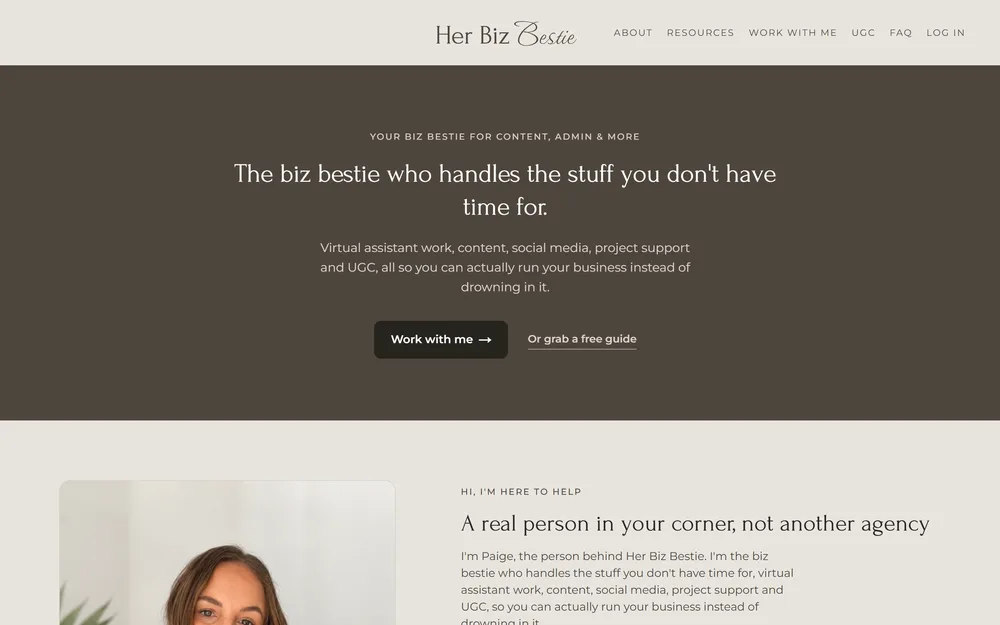
I build websites from Muswellbrook, up the valley, and I build them from scratch. No page builder and no template, and every price is published on this site, so you can see what a website would cost before deciding whether it is worth having alongside the Facebook page.
What a website does that a Facebook page can’t
A Facebook page is a noticeboard for people who already know you. A website is there for somebody who does not, turning up when they search for what you do, with your hours, your prices and a way to get in touch that does not depend on them having an account or scrolling past last month’s posts.
It is also the only one of the two that is yours. Facebook decides who sees your posts and what a business page can do, and it can change either without asking you. A website sits on a domain in your name, says what you want it to say, and is still there if you ever step back from social media.
Keep the Facebook page, and put a website behind it
You do not have to choose between them, and I would not tell you to shut the page down. They work best together: Facebook for the regulars and the everyday posts, the website for everything a stranger wants to know before they ring you, with your posts pointing back to it.
Where it goes wrong is when Facebook is the only place your hours or prices live, and somebody finds a post from three months ago and trusts it. A website holds the current version in one place. On a monthly plan I keep it that way, so the Facebook page can go back to being the easy part.
Cessnock, Kurri Kurri and the vineyards
The council area is really three kinds of place. Cessnock itself, with Vincent Street as its main street. The towns around Kurri Kurri, Weston and Abermain, with Lang Street for the shops. And the vineyards at Pokolbin, Rothbury and Mount View, where a good share of the customers are visitors planning a trip from somewhere else.
Each needs something a little different from a website. A cellar door or a place to stay is selling to somebody who has never been here and can only go on what they find online. A hairdresser or a shop in town is mostly trying to be the one that turns up when a local searches. The build gets the same care either way. What changes is what goes at the top of the page.
The Hunter Expressway, open since March 2014, is Kurri Kurri’s main road to Newcastle, and a road like that carries customers both ways. It carries competition too: a business from further down the road is one search away from the person who used to come to you.